Wednesday, July 06, 2022

ECP 2022 B

An Extended Replication of Death Thought Suppression in a Turkish Sample

Asil Ali Özdoğru and Şevval Osmanoğlu

According to terror management theory, individuals experience cognitive discomfort when they think about the inevitability of death. When mortality becomes salient, individuals suppress thoughts of death through cultural beliefs and values that give them meaning in life and a sense of personal value or self-esteem. In some studies with death primes, individuals were found to have higher accessibility of death thoughts after a delay in the task due to cessation of suppression. In their study in 2012, Trafimow and Hughes found that death thought accessibility was higher in no delay condition than the delay condition. As part of an international registered replication, this study aimed to replicate that finding in a Turkish sample with additional variables. A group of 106 Turkish university students (90% female, mean age 24.3) responded to an online questionnaire. Experimental group was asked to think and write about their own death (n = 50), while the control group was asked about dental pain (n = 56). In the delay condition, half of all participants (n = 49) read an unrelated brief news article. After the stimuli, participants were given either a word generation or completion tasks including death related words. Additionally, participants completed the Rosenberg Self-Esteem Scale (RSES) and the Sense of Humor Scale (SHQ-6-R). Results. We found that the experimental group generated significantly more death-related words than the control group. In both experimental and control groups, there was no significant difference between the two delay conditions or the two word task groups in the amount of death-related words. Number of death-related words were not significantly associated with the RSES or SHQ-6-R scores. Our findings did not replicate the findings of the original study. Theoretical and methodological implications were discussed.

Citation: Özdoğru, A. A., & Osmanoğlu, Ş. (2022, July 5-8). An extended replication of death thought suppression in a Turkish sample [Conference presentation]. 17th European Congress of Psychology, Ljubljana, Slovenia. https://www.ecp2022.eu

Media: Üsküdar Üniversitesi Psikoloji Bölümü Çalışmalarıyla Avrupa Psikoloji Kongresinde! (2022, Temmuz 7). Üsküdar Haber Ajansıhttps://uskudar.edu.tr/tr/icerik/8143/uskudar-universitesi-psikoloji-bolumu-calismalariyla-avrupa-psikoloji-kongresinde

ECP 2022 A

Trust in Algorithms and Statistical Literacy in Low- and High-Stake Contexts

Asil Ali Özdoğru and Merve Büşra Çetin

Many organizations and governments around the world are collecting large amounts of data and using various algorithms to process data and make decisions. These algorithms have important consequences as they are trusted to assist decision making in many contexts. Individuals’ trust in algorithms can be shaped by many personal and contextual factors. Since algorithms have a statistical nature and different levels of explainability, statistical literacy, which is individuals’ ability to understand statistical and probabilistic information, may play a role in their trust in algorithms. Individuals’ trust can also show variation depending on the context of decisions. Low-stake situations such as a restaurant reservation and high-stakes situations such as employment decisions can have different effects on trust. This study tested the effects of statistical literacy, degree of explainability, and decision context on Turkish university students’ level of trust in algorithms. A total of 110 students (95 females, 14 males, 1 unknown) from a foundation university in İstanbul participated in the study. Participants responded to an online survey including basic demographic questions, six items on trust in algorithms, 14 items on statistical literacy, and two items about 12 scenarios featuring algorithms with different levels of explainability and context. Half of the participants (n = 52) received low-stake scenarios with explainability and high-stake scenarios without explainability, while others (n = 58) received low-stake scenarios without explainability and high-stake scenarios with explainability. There was no statistically significant correlation between trust in algorithms and statistical literacy scores. Trust in algorithm ratings in the scenarios did not significantly differ between explainability conditions. On the other hand, trust ratings in high-stake scenarios were significantly lower than the low-stake ones. Results show that individuals’ tendency to trust in algorithms is not related to their levels of statistical literacy but related to context of algorithms in use.

Citation: Özdoğru, A. A., & Çetin, M. B. (2022, July 5-8). Trust in algorithms and statistical literacy in low- and high-stake contexts [Conference presentation]. 17th European Congress of Psychology, Ljubljana, Slovenia. https://www.ecp2022.eu

Media: Üsküdar Üniversitesi Psikoloji Bölümü Çalışmalarıyla Avrupa Psikoloji Kongresinde! (2022, Temmuz 7). Üsküdar Haber Ajansıhttps://uskudar.edu.tr/tr/icerik/8143/uskudar-universitesi-psikoloji-bolumu-calismalariyla-avrupa-psikoloji-kongresinde

Tuesday, June 07, 2022

JCD Phonological Recoding

Lexical Access Speed and the Development of Phonological Recoding during Immediate Serial Recall

Angela M. AuBuchon, Emily M. Elliott, Candice C. Morey, Christopher Jarrold, Nelson Cowan, Eryn J. Adams, Meg Attwood, Büsra Bayram, Taran Y. Blakstvedt, Gerhard Büttner, Thomas Castelain, Shari Cave, Davide Crepaldi, Eivor Fredriksen, Bret A. Glass, Dominic Guitard, Stefanie Hoehl, Alexis Hosch, Stéphanie Jeanneret, Tanya N. Joseph, Christopher Koch, Jaroslaw R. Lelonkiewicz, Grace Meissner, Whitney Mendenhall, David Moreau, Thomas Ostermann, Asil Ali Özdogru, Francesca Padovani, Sebastian Poloczek, Jan Philipp Röer, Christina Schonberg, Christian K. Tamnes, Martin J. Tomasik, Beatrice Valentini, Evie Vergauwe, Haley Vlach, and Martin Voracek

A recent Registered Replication Report (RRR) of the development of verbal rehearsal during serial recall revealed that children verbalized at younger ages than previously thought, but did not identify sources of individual differences. Here, we use mediation analysis to reanalyze data from the 934 children ranging from 5 to 10 years old from the RRR for that purpose. From ages 5 to 7, the time taken for a child to label pictures (i.e. isolated naming speed) predicted the child’s spontaneous use of labels during a visually presented serial reconstruction task, despite no need for spoken responses. For 6- and 7-year-olds, isolated naming speed also predicted recall. The degree to which verbalization mediated the relation between isolated naming speed and recall changed across development. All relations dissipated by age 10. The same general pattern was observed in an exploratory analysis of delayed recall for which greater demands are placed on rehearsal for item maintenance. Overall, our findings suggest that spontaneous phonological recoding during a standard short-term memory task emerges around age 5, increases in efficiency during the early elementary school years, and is sufficiently automatic by age 10 to support immediate serial recall in most children. Moreover, the findings highlight the need to distinguish between phonological recoding and rehearsal in developmental studies of short-term memory.

Citation: AuBuchon, A. M., Elliott, E. M., Morey, C. C., Jarrold, C., Cowan, N., Adams, E. J., Attwood, M., Bayram, B., Blakstvedt, T. Y., Büttner, G., Castelain, T., Cave, S., Crepaldi, D., Fredriksen, E., Glass, B. A., Guitard, D., Hoehl, S., Hosch, A., Jeanneret, S., . . . Voracek, M. (2022). Lexical access speed and the development of phonological recoding during immediate serial recall. Journal of Cognition and Development, 23(5), 624-643. https://doi.org/10.1080/15248372.2022.2083140

Tuesday, May 31, 2022

21st-Century Learners

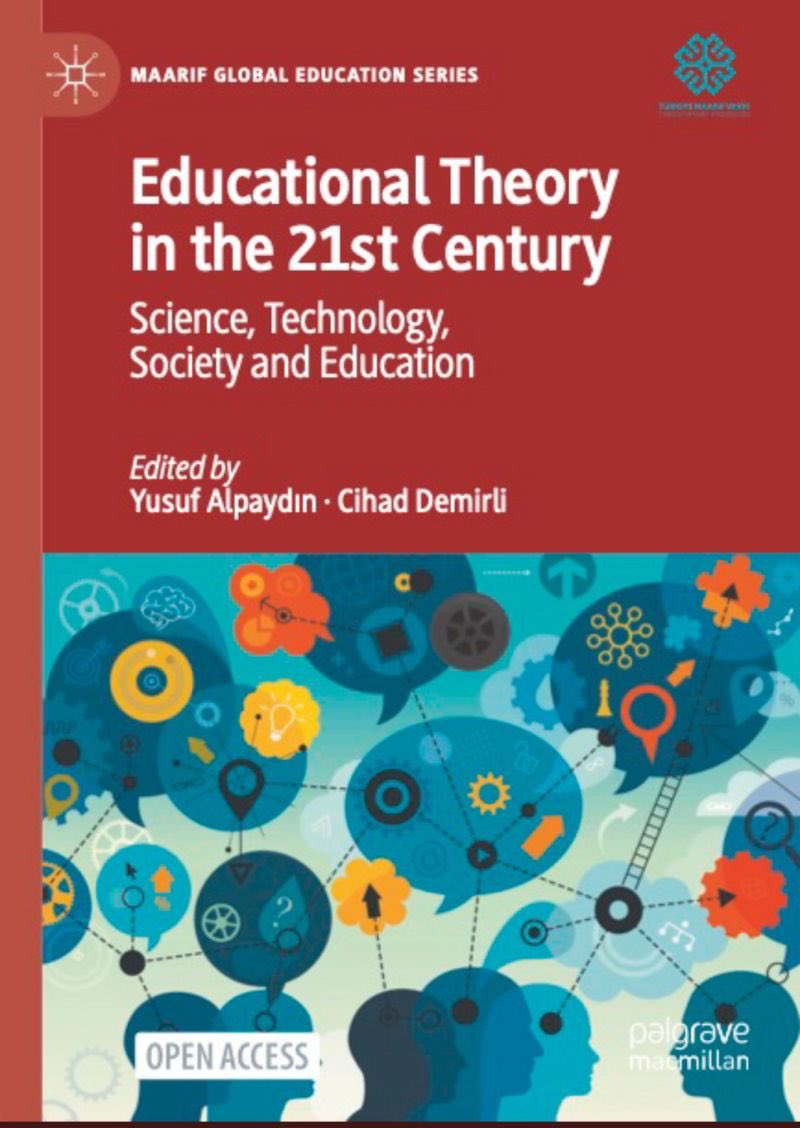
Revisiting Effective Instructional Strategies for Twenty-First-Century Learners

Asil Ali Özdoğru

Rapid changes in the society and technology of the twenty-first century world have brought unique challenges for humanity. This chapter summarizes some of the strategies and support systems for effective learning and teaching in the twenty-first century in addressing some of these challenges. Learning is a dynamic process that is supported by the mechanisms of memory and reasoning as well as an individual’s mindset, habits, goals, and motivation. Theories and research imply that learning is not only a cognitive process but also a social-emotional process that takes place environmentally and culturally across one’s lifespan. Strategies to foster effective learning and teaching should pursue developing a process that is more active, authentic, collaborative, creative, interactive, personalized, relational, and self-regulative. Effective instruction is centered on the learner and knowledge, promotes conceptual understanding and metacognition, and utilizes assessment and technology in alignment with the instructional objectives. Productive instructional strategies used in a caring and supportive environment embedded in service and support systems foster learners’ cognitive, social, and emotional development.

Keywords: Twenty-first-century skills, Instructional strategies, Educational implications

Citation: Özdoğru, A. A. (2022). Revisiting effective instructional strategies for twenty-first-century learners. In Y. Alpaydın & C. Demirli (Eds.), Educational theory in the 21st century: Science, technology, society and education (pp. 175-195). Palgrave Macmillan. https://doi.org/10.1007/978-981-16-9640-4_8

Friday, May 27, 2022

PNAS COVID-19

A Global Experiment on Motivating Social Distancing During the COVID-19 Pandemic

Psychological Science Accelerator Self-Determination Theory Collaboration

Finding communication strategies that effectively motivate social distancing continues to be a global public health priority during the COVID-19 pandemic. This cross-country, preregistered experiment (n = 25,718 from 89 countries) tested hypotheses concerning generalizable positive and negative outcomes of social distancing messages that promoted personal agency and reflective choices (i.e., an autonomy-supportive message) or were restrictive and shaming (i.e., a controlling message) compared with no message at all. Results partially supported experimental hypotheses in that the controlling message increased controlled motivation (a poorly internalized form of motivation relying on shame, guilt, and fear of social consequences) relative to no message. On the other hand, the autonomy-supportive message lowered feelings of defiance compared with the controlling message, but the controlling message did not differ from receiving no message at all. Unexpectedly, messages did not influence autonomous motivation (a highly internalized form of motivation relying on one’s core values) or behavioral intentions. Results supported hypothesized associations between people’s existing autonomous and controlled motivations and self-reported behavioral intentions to engage in social distancing. Controlled motivation was associated with more defiance and less long-term behavioral intention to engage in social distancing, whereas autonomous motivation was associated with less defiance and more short- and long-term intentions to social distance. Overall, this work highlights the potential harm of using shaming and pressuring language in public health communication, with implications for the current and future global health challenges.

Citation: Psychological Science Accelerator Self-Determination Theory Collaboration. (2022). A global experiment on motivating social distancing during the COVID-19 pandemic. Proceedings of the National Academy of Sciences, 119(22), e2111091119. https://doi.org/10.1073/pnas.2111091119

Media: Is controlling communication effective during public health crises? (2022, May 27). Durham Universityhttps://www.durham.ac.uk/news-events/latest-news/2022/05/is-controlling-communication-effective-during-public-health-crises/

Thursday, April 14, 2022

NHB Morality

Situational Factors Shape Moral Judgements in the Trolley Dilemma in Eastern, Southern and Western Countries in a Culturally Diverse Sample

Bence Bago, Marton Kovacs, John Protzko, Tamas Nagy, Zoltan Kekecs, Bence Palfi, Matus Adamkovic, Sylwia Adamus, Sumaya Albalooshi, Nihan Albayrak-Aydemir, Ilham N. Alfian, Sinan Alper, Sara Alvarez-Solas, Sara G. Alves, Santiago Amaya, Pia K. Andresen, Gulnaz Anjum, Daniel Ansari, Patrícia Arriaga, John Jamir Benzon R. Aruta, Alexios Arvanitis, Peter Babincak, Krystian Barzykowski, Bana Bashour, Ernest Baskin, Luisa Batalha, Carlota Batres, Jozef Bavolar, Fatih Bayrak, Benjamin Becker, Maja Becker, Anabel Belaus, Michał Białek, Ennio Bilancini, Daniel Boller, Leonardo Boncinelli, Jordane Boudesseul, Benjamin T. Brown, Erin M. Buchanan, Muhammad M. Butt, Dustin P. Calvillo, Nate C. Carnes, Jared B. Celniker, Christopher R. Chartier, William J. Chopik, Poom Chotikavan, Hu Chuan-Peng, Rockwell F. Clancy, Ogeday Çoker, Rita C. Correia, Vera Cubela Adoric, Carmelo P. Cubillas, Stefan Czoschke, Yalda Daryani, Job A. M. de Grefte, Wieteke C. de Vries, Elif G. Demirag Burak, Carina Dias, Barnaby J. W. Dixson, Xinkai Du, Francesca Dumančić, Andrei Dumbravă, Natalia B. Dutra, Janina Enachescu, Celia Esteban-Serna, Luis Eudave, Thomas R. Evans, Gilad Feldman, Fatima M. Felisberti, Susann Fiedler, Andrej Findor, Alexandra Fleischmann, Francesco Foroni, Radka Francová, Darius-Aurel Frank, Cynthia H. Y. Fu, Shan Gao, Omid Ghasemi, Ali-Reza Ghazi-Noori, Maliki E. Ghossainy, Isabella Giammusso, Tripat Gill, Biljana Gjoneska, Mario Gollwitzer, Aurélien Graton, Maurice Grinberg, Agata Groyecka-Bernard, Elizabeth A. Harris, Andree Hartanto, Widad A. N. M. Hassan, Javad Hatami, Katrina R. Heimark, Jasper J. J. Hidding, Evgeniya Hristova, Matej Hruška, Charlotte A. Hudson, Richard Huskey, Ayumi Ikeda, Yoel Inbar, Gordon P. D. Ingram, Ozan Isler, Chris Isloi, Aishwarya Iyer, Bastian Jaeger, Steve M. J. Janssen, William Jiménez-Leal, Biljana Jokić, Pavol Kačmár, Veselina Kadreva, Gwenaël Kaminski, Farzan Karimi-Malekabadi, Arno T. A. Kasper, Keith M. Kendrick, Bradley J. Kennedy, Halil E. Kocalar, Rabia I. Kodapanakkal, Marta Kowal, Elliott Kruse, Lenka Kučerová, Anton Kühberger, Anna O. Kuzminska, Fanny Lalot, Claus Lamm, Joris Lammers, Elke B. Lange, Anthony Lantian, Ivy Y.-M. Lau, Ljiljana B. Lazarevic, Marijke C. Leliveld, Jennifer N. Lenz, Carmel A. Levitan, Savannah C. Lewis, Manyu Li, Yansong Li, Haozheng Li, Tiago J. S. Lima, Samuel Lins, Marco Tullio Liuzza, Paula Lopes, Jackson G. Lu, Trent Lynds, Martin Máčel, Sean P. Mackinnon, Madhavilatha Maganti, Zoe Magraw-Mickelson, Leon F. Magson, Harry Manley, Gabriela M. Marcu, Darja Masli Seršić, Celine-Justine Matibag, Alan D. A. Mattiassi, Mahdi Mazidi, Joseph P. McFall, Neil McLatchie, Michael C. Mensink, Lena Miketta, Taciano L. Milfont, Alberto Mirisola, Michal Misiak, Panagiotis Mitkidis, Mehrad Moeini-Jazani, Arash Monajem, David Moreau, Erica D. Musser, Erita Narhetali, Danielle P. Ochoa, Jerome Olsen, Nicholas C. Owsley, Asil A. Özdoğru, Miriam Panning, Marietta Papadatou-Pastou, Neha Parashar, Philip Pärnamets, Mariola Paruzel-Czachura, Michal Parzuchowski, Julia V. Paterlini, Jeffrey M. Pavlacic, Mehmet Peker, Kim Peters, Liudmila Piatnitckaia, Isabel Pinto, Monica Renee Policarpio, Nada Pop-Jordanova, Annas J. Pratama, Maximilian A. Primbs, Ekaterina Pronizius, Danka Purić, Elisa Puvia, Vahid Qamari, Kun Qian, Alain Quiamzade, Beáta Ráczová, Diego A. Reinero, Ulf-Dietrich Reips, Cecilia Reyna, Kimberly Reynolds, Matheus F. F. Ribeiro, Jan P. Röer, Robert M. Ross, Petros Roussos, Fernando Ruiz-Dodobara, Susana Ruiz-Fernandez, Bastiaan T. Rutjens, Katarzyna Rybus, Adil Samekin, Anabela C. Santos, Nicolas Say, Christoph Schild, Kathleen Schmidt, Karolina A. Ścigała, MohammadHasan Sharifian, Jiaxin Shi, Yaoxi Shi, Erin Sievers, Miroslav Sirota, Michael Slipenkyj, Çağlar Solak, Agnieszka Sorokowska, Piotr Sorokowski, Sinem Söylemez, Niklas K. Steffens, Ian D. Stephen, Anni Sternisko, Laura Stevens-Wilson, Suzanne L. K. Stewart, Stefan Stieger, Daniel Storage, Justine Strube, Kyle J. Susa, Raluca D. Szekely-Copîndean, Natalia M. Szostak, Bagus Takwin, Srinivasan Tatachari, Andrew G. Thomas, Kevin E. Tiede, Lucas E. Tiong, Mirjana Tonković, Bastien Trémolière, Lauren V. Tunstead, Belgüzar N. Türkan, Mathias Twardawski, Miguel A. Vadillo, Zahir Vally, Leigh Ann Vaughn, Bruno Verschuere, Denis Vlašiček, Martin Voracek, Marek A. Vranka, Shuzhen Wang, Skye-Loren West, Stephen Whyte, Leigh S. Wilton, Anna Wlodarczyk, Xue Wu, Fei Xin, Su Yadanar, Hiroshi Yama, Yuki Yamada, Onurcan Yilmaz, Sangsuk Yoon, Danielle M. Young, Ilya Zakharov, Rizqy A. Zein, Ingo Zettler, Iris L. Žeželj, Don C. Zhang, Jin Zhang, Xiaoxiao Zheng, Rink Hoekstra, and Balazs Aczel

The study of moral judgements often centres on moral dilemmas in which options consistent with deontological perspectives (that is, emphasizing rules, individual rights and duties) are in conflict with options consistent with utilitarian judgements (that is, following the greater good based on consequences). Greene et al. (2009) showed that psychological and situational factors (for example, the intent of the agent or the presence of physical contact between the agent and the victim) can play an important role in moral dilemma judgements (for example, the trolley problem). Our knowledge is limited concerning both the universality of these effects outside the United States and the impact of culture on the situational and psychological factors affecting moral judgements. Thus, we empirically tested the universality of the effects of intent and personal force on moral dilemma judgements by replicating the experiments of Greene et al. in 45 countries from all inhabited continents. We found that personal force and its interaction with intention exert influence on moral judgements in the US and Western cultural clusters, replicating and expanding the original findings. Moreover, the personal force effect was present in all cultural clusters, suggesting it is culturally universal. The evidence for the cultural universality of the interaction effect was inconclusive in the Eastern and Southern cultural clusters (depending on exclusion criteria). We found no strong association between collectivism/individualism and moral dilemma judgements.

Citation
: Bago, B., Kovacs, M., Protzko, J., Nagy, T., Kekecs, Z., Palfi, B., Adamkovic, M., Adamus, S., Albalooshi, S., Albayrak-Aydemir, N., Alfian, I. N., Alper, S., Alvarez-Solas, S., Alves, S. G., Amaya, S., Andresen, P. K., Anjum, G., Ansari, D., Arriaga, P., . . . Aczel, B. (2022). Situational factors shape moral judgements in the trolley dilemma in Eastern, Southern and Western countries in a culturally diverse sample. Nature Human Behavior, 6, 880-895. https://doi.org/10.1038/s41562-022-01319-5

Media: Bago, B. (2022, May 24). How universal is our morality? Many aspects of our morality are culturally universal. Psychology Todayhttps://www.psychologytoday.com/ca/blog/feast-reasoning/202205/how-universal-is-our-morality

Friday, March 18, 2022

UPPK 2022 C

Uluslararası Uzamış Yas Bozukluğu Ölçeği Türkçe Formunun Güvenirlik ve Geçerlik Çalışması

Asil Ali Özdoğru ve Beyzanur Yalçın

Yas, sevilen bir kişinin ölümü ya da değer verilen nesne, hedef veya ilişkinin yitirilmesi gibi olaylarda gelişen kayıp algısına karşı verilen bedensel, psikolojik ve sosyal tepkilerdir. Bu tepkiler normal olmakla beraber altı aydan uzun süren ve işlev kaybına yol açan şiddetli deneyimler uzamış yas bozukluğu olarak değerlendirilmektedir. Uluslararası Uzamış Yas Bozukluğu Ölçeği (UUYBÖ), Dünya Sağlık Örgütünün Uluslararası Hastalık Sınıflandırma Sistemi ICD-11’e göre geliştirilmiş bireysel farklılıkların yanı sıra kültürel özellikleri de dikkate alan bir ölçüm aracıdır. Bu çalışmada UUYBÖ’nün Türkçe uyarlamasının yapılarak güvenirlik ve geçerlik analizlerinin yapılması hedeflenmiştir. UUYBÖ, 13 ana madde, bir kültürel madde, bir süre maddesi ve 20 ek maddeden oluşan beşli Likert tipi bir özbildirim ölçeğidir. İngilizce aslından Türkçe’ye çeviri ve geri çeviri yöntemiyle uyarlanan ölçek, çoğunluğu üniversite öğrencisi ve yüzde 83’ü kadın toplam 354 yetişkin katılımcıya uygulanmıştır. Yaşları 18 ila 53 arasında değişen katılımcıların yaş ortalaması 24,37’dir (SS=6,04). Katılımcılara UUYBÖ’nün yanı sıra Uzamış Yas Ölçeği (UYÖ-13), Hasta Sağlık Anketi (HSA-9) ve Yaygın Anksiyete Bozukluğu Testi (YAB-7) uygulanmıştır. Yapılan analizlerde UUYBÖ’nün özdeğeri 5,81 olan ve toplam varyansın %45’ini açıklayan bir faktöre sahip olduğu görülmüştür. UUYBÖ yas şiddeti genel puanı ile UYÖ-13, HSA-9 ve YAB-7 ölçek puanları arasında istatistiksel olarak anlamlı ,455 ila ,834 arasında değişen pozitif korelasyonlar elde edilmiştir. UUYBÖ’nin Cronbach Alfa katsayısı da ,890 olarak hesaplanmıştır. Elde edilen bulgulara göre UUYBÖ, orijinal ölçekte olduğu gibi tek faktörlü bir yapıya sahip, ölçüt geçerliği bulunan ve yüksek güvenirlik seviyesine sahip bir ölçek olarak değerlendirilebilir. UUYBÖ Türk yetişkinlerin uzamış yas tepkilerini uluslararası ölçütlere göre değerlendirmede yeterli psikometrik özelliklere sahip bir ölçüm aracı olarak araştırmacı ve uygulamacılar tarafından kullanılabilir.

Atıf: Özdoğru, A. A. ve Yalçın, B. (2022, Mart 18-19). Uluslararası Uzamış Yas Bozukluğu Ölçeği Türkçe formunun güvenirlik ve geçerlik çalışması [Sözlü bildiri sunumu]. 4. Uluslararası Pozitif Psikoloji Kongresi, İstanbul, Türkiye. https://ppcongress.com/

UPPK 2022 B

Çocuk Yaşta Evlenmiş Genç Yetişkinlerde Çift Uyumu ve Aile Bütünlük Duygusu

Birol Yılmaz ve Asil Ali Özdoğru

Çocuk yaşta evlilik oranları Türkiye’de yıllar içinde düşüş göstermiş olmakla beraber hala gelişmiş ve gelişmekte olan ülkelere kıyasla yüksek seviyelerdedir. Çocuk yaşta evlilik yapan bireylerin ve özellikle kadınların bireysel gelişimi ve aile işlevleri olumsuz etkilere maruz kalmaktadır. Aile işlevselliği hem bireylerin hem de ailelerin mutluluk ve iyi oluşlarıyla ilgili olarak pozitif psikoloji kuram, araştırma ve terapilerinde ele alınmaktadır (Conoley vd., 2015; Sheridan ve Burt, 2009). Aile bütünlük duygusu, ailenin yaşamlarını anlaşılabilir, yönetilebilir ve anlamlı bulmasıdır (Antonovsky, 1997). Bu çalışmada çocuk yaşta evlilik yapmış genç yetişkinlerin çift uyumu ve aile bütünlük duygusu araştırılmıştır. Bu amaçla araştırmanın çalışma grubunu, 18 yaşın altında evlenmiş ve mevcut yaşı 45'i geçmeyen 40’ı kadın (%63,5) ve 23’ü (%36,5) erkek toplam 63 katılımcı oluşturmaktadır. Katılımcıların yaş aralığı 18-45 ve yaş ortalaması 36,83’tür (SS=7,19). Katılımcılara kişisel bilgi sorularının yanı sıra Yenilenmiş Çift Uyum Ölçeği (YÇUÖ) ve Aile Bütünlük Duygusu Ölçeği (ABDÖ) Kısa Formu çevrimiçi olarak uygulanmıştır. Veriler normal dağılım özelliği gösterdiği için parametrik denence testleriyle analiz edilmiştir. Bu çalışmadaki ABDÖ toplam ve YÇUÖ toplam puan ortalamaları diğer çalışmalardaki puanlarla karşılaştırıldığında erken evlilik yapmış bireylerin puanlarının erken evlilik yapmamış olanlardan istatistiksel olarak anlamlı derecede daha düşük olduğu bulunmuştur. ABDÖ toplam puanı ile YÇUÖ Uzlaşım alt ölçek puanı arasında pozitif yönlü ve anlamlı bir ilişki tespit edilmiştir. Erkeklerin ABDÖ toplam puanının kadınlara göre daha yüksek olduğu görülmüştür. Evlenme biçimi ve algılanan anne baba tutumu ile ABDÖ toplam puanı ve YÇUÖ Uzlaşım alt ölçek puanları arasında anlamlı ilişkiler gözlenmiştir. Bu çalışma sonucunda çocuk yaşta yapılmış evliliklerde aile bütünlüğü ve çift uyumlarının daha düşük olduğu, kadınların aile bütünlüğü duygusunun erkeklere göre daha düşük olduğu ve aile bütünlüğü ile çift uyumunun bazı demografik özelliklerle ilişkili olduğu görülmüştür. Bu bulgular alanyazındaki birçok çalışma ile uyumluluk arz etmekle beraber konu hakkında daha çok çalışmaya ihtiyaç bulunmaktadır.

Atıf: Yılmaz, B. ve Özdoğru, A. A. (2022, Mart 18-19). Çocuk yaşta evlenmiş genç yetişkinlerde çift uyumu ve aile bütünlük duygusu [Sözlü bildiri sunumu]. 4. Uluslararası Pozitif Psikoloji Kongresi, İstanbul, Türkiye. https://ppcongress.com/

UPPK 2022 A

Halk Eğitim Merkezi Kurslarına Katılan Yetişkinlerde Serbest Zaman Doyumu, Akış Deneyimi ve İyi Oluş

Gülser Beyhan Baştürk ve Asil Ali Özdoğru

Yaygın eğitim kurumlarında verilen eğitimler yetişkinlerin yaşam boyu öğrenme ve gelişimlerini desteklemektedir. Bu çalışmada halk eğitim merkezlerindeki kurslara katılan yetişkinlerin serbest zaman doyumu, akış deneyimi ve iyi oluş düzeylerinin incelenmesi amaçlanmıştır. Bu amaçla Bursa ilindeki Nilüfer ve İnegöl Halk Eğitim Merkezlerine devam eden yüzde 81’i kadın toplam 159 kursiyere anket uygulaması yapılmıştır. Katılımcıların yaş aralığı 18-65 ve yaş ortalaması 34,5‘tir (SS=11,7). Çalışmada veri toplama araçları olarak sosyodemografik sorulara ek olarak Serbest Zaman Doyum Ölçeği, PERMA Ölçeği, Flow Yaşantısı Ölçeği kullanılmıştır. Normal dağılım özelliği göstermeyen verilerin analizinde parametrik olmayan hipotez testleri kullanılmıştır. Analizler sonucunda serbest zaman doyumu, akış deneyimi ve iyi oluş düzeylerinin cinsiyet, eğitim durumu, ekonomik durum ve medeni durum gibi bazı değişkenlere göre istatistiksel olarak anlamlı farklılıklar gösterdiği tespit edilmiştir. Sosyal-kültürel kurslara katılan kursiyerlerin iyi oluş ve serbest zaman doyum puanları mesleki-teknik kurslara katılan kursiyerlerin puanlarından anlamlı derecede daha yüksek bulunmuştur. Serbest zaman doyumu, akış deneyimi ve iyi oluş arasında pozitif yönde, zayıf ve orta düzeylerde anlamlı korelasyonlar tespit edilmiştir. Çoklu regresyon analizi sonucunda serbest zaman doyumu ve akış deneyiminin iyi oluşu %20,8 oranında yordadığı bulunmuştur. Araştırmanın bulguları pozitif psikoloji ve eğitim psikolojisi alanları temel alınarak tartışılmış, sonuçlarda araştırmanın kısıtlılıkları ve gelecek araştırmalara yönelik öneriler sunulmuştur.

Atıf: Beyhan Baştürk, G. ve Özdoğru, A. A. (2022, Mart 18-19). Halk eğitim merkezi kurslarına katılan yetişkinlerde serbest zaman doyumu, akış deneyimi ve iyi oluş [Sözlü bildiri sunumu]. 4. Uluslararası Pozitif Psikoloji Kongresi, İstanbul, Türkiye. https://ppcongress.com/

Wednesday, February 09, 2022

ECCE Workforce

Improving the Quality of the Early Childhood Care and Education Workforce in Turkey

Asil Ali Özdoğru

Children's learning and development is shaped by their early experiences and environments. Early childhood care and education (ECCE) is a set of programs and services provided to children from birth to school years that supports their learning and development. Availability of quality ECCE programs is vital for the development of not only children and families but also communities and countries. High quality ECCE programs have certain structural and process characteristics. One of the most important determinants of quality in ECCE programs is the quality of professional workforce serving children and families. In order to increase quality, there should be systems and supports for the training and development of high quality ECCE professionals. This chapter takes a look into Turkey, outlines its preservice education for ECCE teachers, presents a national in-service training project, and offers implications for practice. There need to be effective policies and strategies to cultivate a high-quality workforce in early childhood education and development across the world.

Citation: Özdoğru, A. A. (2022). Improving the quality of the early childhood care and education workforce in Turkey. In O. Al-Mahdi & T. Purinton (Eds.), Global perspectives on teacher performance improvement (pp. 23-38). IGI Global. https://doi.org/10.4018/978-1-7998-9278-6.ch002